From the first patrols of 1908 to seven Districts today: the story of Scouting across Edinburgh, East Lothian, Midlothian and the Scottish Borders.
Pictured: the finale of the first Edinburgh Gang Show, King’s Theatre, 1960.
It began in 1907, with twenty boys camping on an island off the south coast of England. Within months, Scouting had reached Scotland.
Before long, Scout patrols were meeting in Edinburgh, East Lothian, Midlothian and the Scottish Borders, discovering new skills, making friends and exploring the world around them. South East Scotland Scouts, as we know it today, was formed in 2008. But the story of Scouting in our communities reaches back to the very beginnings of the movement.
From pioneering Scout Groups and wartime service to outdoor adventures, extraordinary volunteers and generations of young people taking to the stage, this is the history that shaped us. Open any “Read more” to go deeper, and follow the links to the original sources.
And it’s still being written.
An experiment on an English island became a movement almost overnight, and young people across Edinburgh, East Lothian, Midlothian and the Scottish Borders were among the first to take it up.
On 1 August 1907, Robert Baden-Powell brought together twenty boys for an experimental camp on Brownsea Island, Dorset. For eight days, they tried activities including camping, tracking, observation and teamwork.
Read more about 1907
The experiment helped lay the foundations of a movement built around learning by doing, responsibility, friendship and adventure. Baden-Powell had originally intended his ideas to support existing youth organisations. Instead, young people began making Scouting their own.
By the following year, Scout patrols were appearing across Britain, including here in south-east Scotland.
Find out more: Discover the earliest days of Scouting (Scouts)
In January 1908, the first instalment of Scouting for Boys was published. Young people began organising their own patrols, sometimes before formal groups or adult leaders existed, and some of the earliest Scout Groups in the country were established in and around Edinburgh.
Read more about 1908
The 9th Edinburgh, now 9th Braid (George Watson’s College), traces its beginnings to 1908. Its remarkable surviving records include early Court of Honour proceedings, photographs, camp reports and patrol logbooks, giving us a window into what Scouting was actually like more than a century ago.
The 3rd Portobello (St James’ Church), now 3rd Edinburgh North East, is also recognised by The Scout Association among the Groups believed to have started in 1908. Within a few years, some of its first members would be among the names on our First World War Roll of Honour.
Another early troop, the 11th Midlothian (1st Portobello), was already organising camps at places including Biel and Heriot.
These early Groups were part of an extraordinary period of growth. Scouting spread because young people wanted to take part, often long before the organisational structures familiar to us today had developed.
Find out more: Explore the 9th Braid’s historical archive · How Scouts identifies its earliest troops
In March 1910, Robert Baden-Powell visited Edinburgh during a tour of Scotland. A month later, the 11th Midlothian (1st Portobello) put on three evenings of music and theatre to raise money for camp.
Read more about 1910
By this point, Scouting had grown from an experiment into a rapidly expanding movement. Young people were organising camps, learning practical skills and developing friendships through their new Scout patrols. And they were doing more than camping.
In April 1910, the 11th Midlothian staged its entertainment at St Anne’s Hall in Tower Street, with music and theatrical performances. The troop’s log books record that the takings were “very satisfactory”, although, sadly, they don’t say how much was raised.
This early concert is one of the first surviving examples of a tradition that would become a defining feature of Edinburgh Scouting: young people performing to entertain their communities and support their adventures. Jump to the first Edinburgh Gang Show.
Find out more: Entertainment in Edinburgh Scouting before Gang Show (Edinburgh Gang Show)
On 11 March 1911, the 1st Midlothian (Gorebridge) Scout Group was formed. More than a century later, it still offers Scouting to young people in Gorebridge.
Read more about 1911
Across south-east Scotland, Scouting was becoming part of community life. Groups developed connections with churches, schools and local organisations, while volunteers created opportunities for young people to get outdoors and learn skills that were rarely taught in classrooms.
Gorebridge’s story also reaches into our wartime history: two of its former members, Pilot Officer Douglas Cooper and Flying Officer Thomas Gordon, are remembered on our Second World War Roll of Honour.
Find out more: The history of 1st Midlothian (Gorebridge)
Scouts gathered beneath Arthur’s Seat for an Edinburgh and Midlothian Boy Scout Rally, bringing young people together from different troops to share their skills and celebrate how quickly the movement had become established.
But within weeks, the outbreak of the First World War would dramatically change life across Britain. For a movement barely seven years old, its first great test was about to begin.
Two world wars tested the young movement. In between, Scouting grew, welcomed younger members, and took to the stage.
The First World War transformed Scouting. Many older Scouts and adult volunteers entered military service, while younger members supported their communities at home, carrying messages, helping with practical tasks and supporting wartime services.
Our Roll of Honour records 28 Scouts and volunteers from our area who did not come home. Among them were James Clark, Commissioner for Edinburgh and Leith, killed at Ypres in 1915, and James Stevenson Gow, an 18-year-old Scout from the 3rd East Edinburgh (Portobello) Troop, lost aboard HMS Viknor that January.
Read more about the First World War
The consequences reached Scout Groups throughout Edinburgh, East Lothian, Midlothian and the Scottish Borders. Some of those who had helped establish Scouting in its earliest years never returned: Scoutmasters, Assistant Scoutmasters, Patrol Leaders and Scouts from Leith to Hawick.
Remembering them is an important part of understanding the history of our movement and the communities from which it grew.
The introduction of Wolf Cubs in December 1916 opened Scouting to younger children. Inspired by Rudyard Kipling’s The Jungle Book, the new section offered games, stories and activities adapted for younger members. Many of its names and traditions, including Akela, would remain familiar to generations of Cubs.
Scouting was becoming something young people could enjoy over several stages of childhood, rather than simply a troop for older boys.
In 1924, a Scout troop was established in Davidson’s Mains, first known as the 30th Midlothian. Its earliest meetings took place on Tuesday evenings in the Parish Church Hall, and by 1927 it had moved into its own Scout Hall on Main Street.
Read more about 1924
Over the decades, the Group would become the 30th Inverleith and eventually the 30th Craigalmond. Its history offers an unusually detailed account of how local Scouting evolved through changing neighbourhoods, District boundaries and generations of young people.
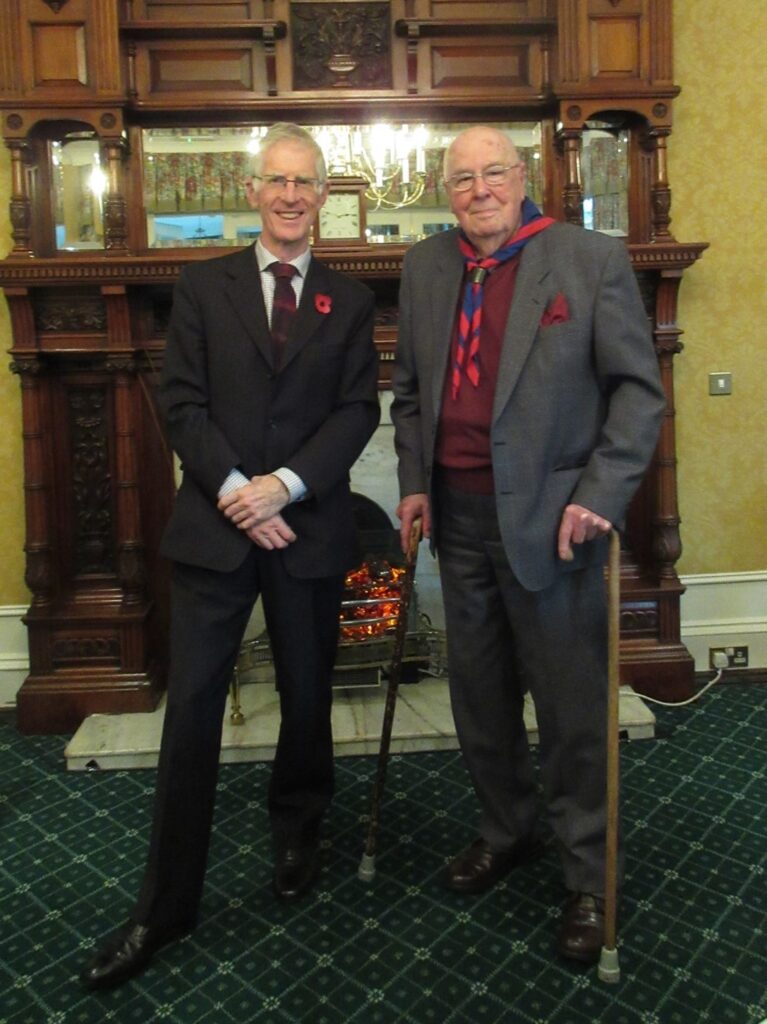
One of its Scouts, Ken Thomson, became a Queen’s Scout in 1967 and went on to lead Scouting across Edinburgh and Scotland. Read Ken’s story.
In 2024, the Group marked its centenary with an oral history project. Jump to the centenary.
Find out more: The 30th Craigalmond’s history
Early Scouting was remarkably creative. Alongside hiking, camping and pioneering, Groups staged plays, musicals and concerts. By the 1930s Edinburgh had a Scout Orchestra, while choirs and dancing teams took part in Scout events.
Read more about the 1920s and 1930s
In 1932, Edinburgh Scouts staged an SS Rover Revue, billed as “a mixture of mirth, melody and music”. The following year brought Cinderella à la Moderne, featuring two ugly sisters called Margarine and Vaseline.
By 1934 the Rover Revue was in its seventh year and ran for a full week. In 1938 Colinton’s 108th Group staged Flying High “with full orchestral accompaniment”, and Portobello District put on Pleasure Cruise.
These performances raised money, entertained communities and gave young people the chance to build confidence and talents beyond traditional outdoor activities.
The tradition long pre-dated the Edinburgh Gang Show, but it helped create the foundations for what came next. Jump to 1960.
Find out more: The forgotten performances of Edinburgh’s early Scouts (Edinburgh Gang Show)
The 12th Portobello (Royal High School) Scout Group was established in 1931. By 1947, the Group’s own magazine recorded 185 members across its sections and leadership team.
Read more about 1931
Over the decades that followed, it developed Cubs, Scouts, Sea Scouts, Air Scouts and Rover activities. Its surviving records contain photographs, annual camp reports, magazines and personal recollections.
These materials tell a much wider story of changing childhoods, education, travel and community life. Today, the collection remains available through the Royal High School Club.
Find out more: The 12th Portobello historical collection
In January 1933, twelve-year-old John Cruickshank helped found a new Scout troop at Greenbank Parish Church, today’s 4th Braid. Eleven years later, as an RAF Coastal Command pilot, he was awarded the Victoria Cross. He died in August 2025, aged 105, the last surviving Victoria Cross recipient of the Second World War.
John Cruickshank VC in later life.
On 9 December 1937, the 107th Edinburgh Scout Troop was formed. A photograph from 1947 shows its members marching down Princes Street, past a reviewing party outside the National Gallery: a side of Edinburgh Scouting rarely seen today.
Read more about 1937
The Group’s history is especially valuable because it has preserved photographs and records showing how both its activities and its place in the Scouting structure changed.
Originally part of Craiglockhart District, it later became part of Merchiston and then Pentland, a reminder of how often District boundaries have shifted. See how the Districts changed.
Find out more: The 107th Edinburgh’s history and photographs
Although South East Scotland Region would not be created until 2008, the charity’s registered history reaches much further back. The Scottish Charity Register gives 1 December 1938 as the registration date for South East Scotland Regional Scout Council, charity number SC010563.
Read more about 1938
This reflects the legal continuity between today’s regional organisation and the older Edinburgh Scout Council that became its predecessor. When the Region formed, the Edinburgh Area Scout Council changed its name and constitution to become the new Regional Scout Council.
The history of the organisation, like that of the Groups it supports, extends well beyond its present name.
Sources: Scottish Charity Register: SC010563 · Regional constitution (PDF)
When war broke out again in September 1939, Groups faced uncertainty, restrictions and the loss of adult volunteers to military service. Yet Scouting carried on wherever it could.
Our Second World War Roll of Honour records 53 former Scouts and volunteers, from Hawick to Leith. Seven came from a single Group, the 63rd Edinburgh (Waverley).
Read more about the Second World War
The surviving records of the 30th Midlothian document leaders entering the armed forces, while the 12th Portobello’s history describes meetings resuming under wartime conditions, with first aid and Morse code among the activities.
By 1943, the 12th Portobello had a Polish patrol, reflecting the presence of Polish young people in wartime Edinburgh, and its Scouts kept camping despite the restrictions of war.
The show went on, too: in 1940 the 43rd Midlothian staged The White Knights of 1940 under wartime restrictions.
Find out more: The 30th Craigalmond’s war years · 12th Portobello collection · Mirth, melody and music
After the war came the places and traditions that generations still know: a campsite in the Pentlands, a stage at the King’s, and a boat shed on the Forth.
At the foot of the Pentland Hills lies a place familiar to generations of Scouts. Long before Scouting arrived, the Bonaly estate had been the country retreat of Lord Cockburn, the nineteenth-century Scottish judge, writer and conservationist. In 1945, it was purchased for Scouting.
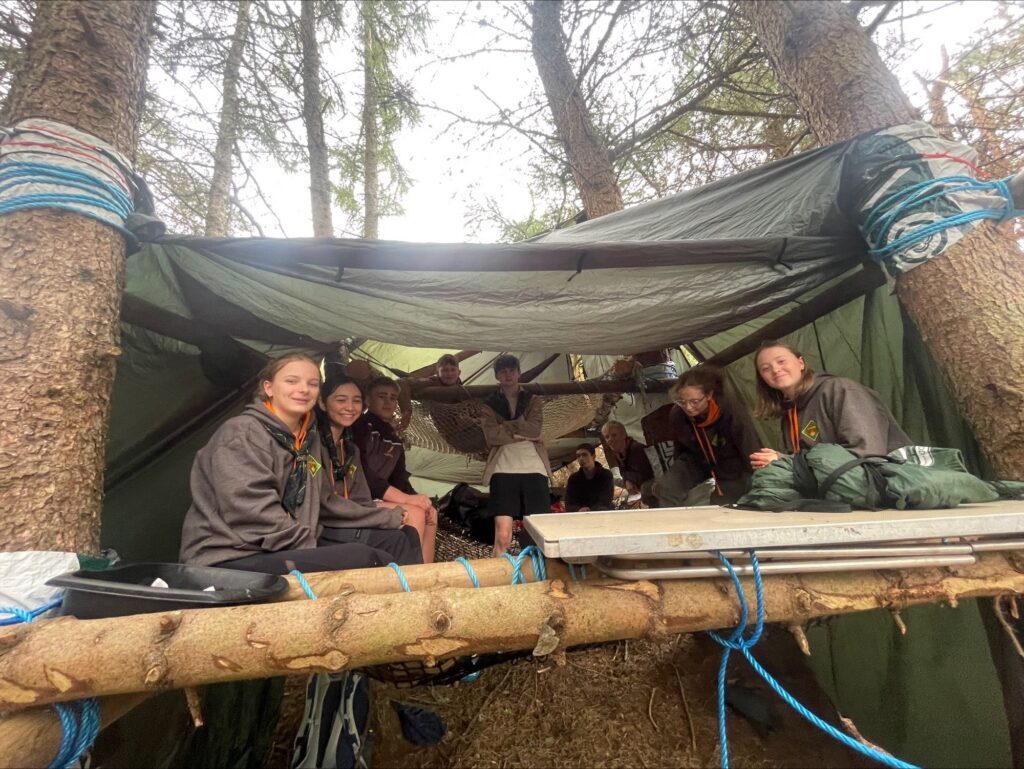
Bonaly today: Explorers building their camp at SkyCamp.
Read more about Bonaly
Over the following decades, Bonaly developed into a place where young people could camp, learn outdoor skills, take part in activities and experience independence beyond their usual surroundings.
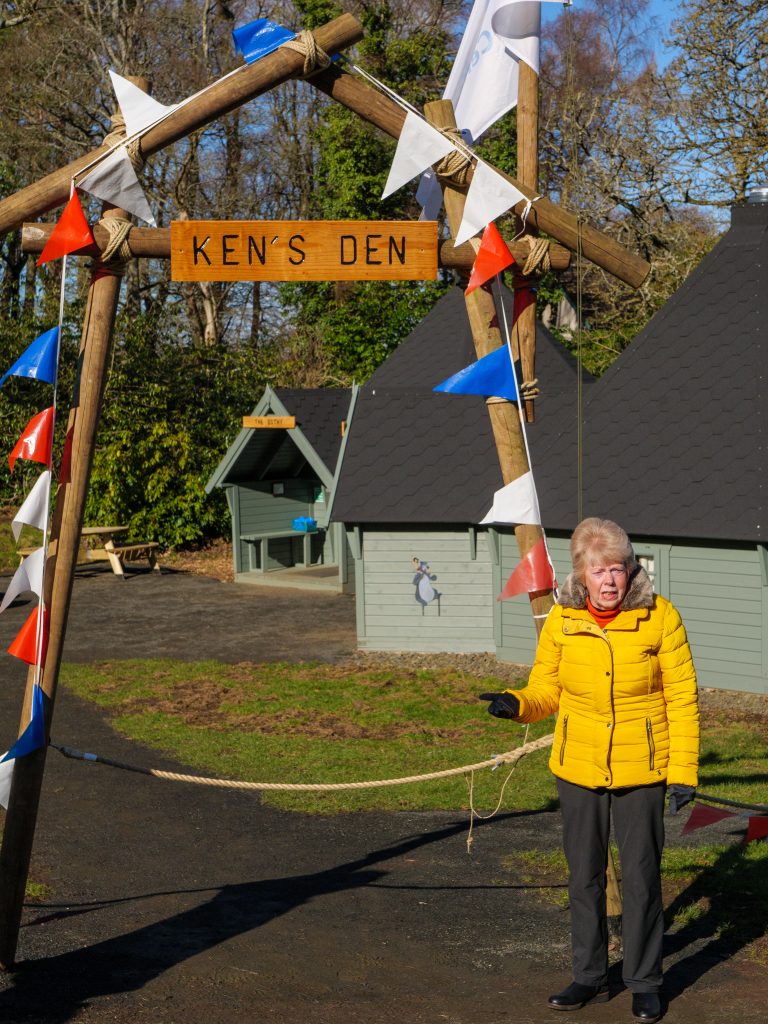
From first nights under canvas to major camps and residential adventures, Bonaly became one of the enduring landmarks of Scouting in south-east Scotland. In 2023 it gained Ken’s Den, built in memory of Ken Thomson. Jump to 2020.
Find out more: About Bonaly Scout Centre
On 14 November 1960, the first Edinburgh Gang Show opened at the King’s Theatre. Organised by the County of Edinburgh and Leith Boy Scouts Association, it brought local young people onto a professional stage for a week of music, sketches and dance.
1960. The finale of the first Edinburgh Gang Show.
2024. Same show, same spirit, more lights.
Read more about the first Gang Show
The show was part of an international Scouting tradition established by Ralph Reader in London in 1932, but Edinburgh quickly developed a character of its own. Its first decade was shaped by directors including Callum Mill, musical director Dick Telfer and dance director Betty Brandon.
After a brief move to the Royal Lyceum in 1962, the Gang returned to the King’s in 1963. In 1964, after an assessment by J Murray Napier of Scout headquarters, the production earned the right to wear the famous red Gang Show scarf.
A tradition that would become one of Edinburgh’s best-loved Scout and Guide activities was firmly established, and its roots go back to concerts like the 11th Midlothian’s in 1910.
Find out more: Edinburgh Gang Show’s earliest productions · About the Gang Show today
In 1967, Edinburgh Gang Show became the first Gang Show in the world to include girls in its cast. With the permission of founder Ralph Reader, members of Girlguiding joined the Scouts on stage.
Read more about 1967
It was an important development, particularly at a time when the wider Scout movement had not yet begun admitting girls to its youth sections. That wouldn’t happen until 1976.
The partnership between Scouts and Guides has continued ever since, offering generations of young people the opportunity to perform together and experience the excitement of live theatre.
Find out more: This milestone in Gang Show history
Scout boating, first for Sea Scouts, had been running from Granton since around the start of the 1960s. In 1969, it moved to Longcraig Pier at South Queensferry, beside the Firth of Forth, opening sailing and watersports to Scouts and Guides from across the area.
Longcraig Scout Centre today, in the shadow of the Forth Bridge.
Read more about Longcraig’s early years
The early centre operated from a wooden hut, offering evening and weekend sessions. A second hut and a toilet block followed as more young people came to take part.
The pier itself is far older than the Scouts’ use of it: Longcraig Pier was built around 1812 by the engineers John Rennie and Robert Stevenson, as part of improvements to the Queensferry crossing.
In 2019, Longcraig celebrated 50 years of continuous operation, a tradition of adventure on the water that continues today. See what happened in 1998.
Find out more: Longcraig’s history · About Longcraig
In the second half of the twentieth century, Scouting opened its doors wider, to girls, to younger children and to young adults, and invested in the places where adventures happen.
In 1976, girls were admitted to Venture Scouts. In 1986, Beaver Scouts became an official section for six to eight-year-olds. And from 1992, girls could join the younger Scout sections too.
Read more about 1976–1992
Scouting changed significantly during the second half of the twentieth century. The girls who joined Venture Scouts in 1976 were the first to join a UK Scout youth section since the early days of the movement. After 1992, mixed membership gradually became the standard across Scouting.
For local Groups, these national developments brought new opportunities, new volunteers and new generations of young people into Scouting. Edinburgh’s Gang Show had already shown what Scouts and Guides could do together back in 1967.
Find out more: The history of girls and women in Scouts
Nearly thirty years after Scout boating moved to South Queensferry, Longcraig’s wooden huts were replaced with a purpose-built activity centre, officially opened in 1998 by Lord Airlie.
Read more about Longcraig in 1998
Longcraig continued to develop its programme, expanding opportunities for sailing, kayaking, rafting and other activities, while remaining entirely run by volunteers. What began as a base for Sea Scouts had become an important activity centre for the wider Scouting and Guiding community.
Volunteer Malcolm Leckie planned the official opening, and later led fundraising that raised over £118,000 for equipment between 2001 and 2008. In 2023, the centre added solar heating and power and upgraded its changing facilities.
Find out more: Longcraig’s history · Malcolm Leckie’s years at Longcraig
A major change to the UK Scout programme introduced Explorer Scouts for 14 to 18-year-olds and Scout Network for 18 to 25-year-olds, replacing the former Venture Scout section. Across the area that would become South East Scotland, Explorer Units and Network activities created new opportunities for expeditions, volunteering and leadership.
A century after the Brownsea Island camp, Scouts across the world celebrated the movement’s centenary. From January 2007, Scout Groups in the UK were also required to make provision for girls to join all youth sections.
Read more about the centenary
Locally, the centenary was marked with a camp at Dalmeny. John Kennedy, then Edinburgh Area Commissioner, asked Ken Thomson to coordinate it. Read Ken’s story.
The movement that had begun in 1907 was entering its second century with a much broader understanding of who could take part.
Four Areas became one Region, inheriting a century of traditions, and the people who carried them.
On 1 April 2008, as part of a national reorganisation, Scotland’s 31 Scout Areas were replaced by eight Regions. Four Areas came together to form ours.
City of Edinburgh
East Lothian
Midlothian
Borders
= South East Scotland
Read more about 2008
The constitution had been agreed on 17 March 2008, with the new organisation succeeding the four former Area Scout Councils. Legally, the Edinburgh Area Scout Council changed its name and constitution to become the new Regional Scout Council, providing continuity with the organisation that had supported Scouting in the city for decades. See 1938.
The new structure brought Groups and Districts across a large and diverse area together, from the communities of Edinburgh to the towns and villages of East Lothian, Midlothian and the Scottish Borders. Ken Thomson took on adult training for the new Region.
Although the Region was new, the Scouting traditions it inherited were already a century old.
A further reorganisation reshaped Edinburgh’s Districts. Blackford and Morningside became Braid. Haymarket and Inverleith became Craigalmond. Leith and Portobello came together as Edinburgh North East.
Braid
Craigalmond
Edinburgh North East
Pentland
East Lothian
Midlothian
The Borders
Find your District →Read more about the former Districts
But the names of former Districts tell a much longer story. A framed collection of old District and Area badges at Bonaly, titled “South East Scotland Scouts: Past & Present”, records many of them:
Edinburgh Districts: Blackford, Craiglockhart, Gorgie, Haymarket, Inverleith, Leith, Liberton, Merchiston, Morningside, Pentland & Almond Valley, Portobello, Salisbury and Waverley.
City and county associations: City of Edinburgh; County of Edinburgh and Leith; City of Edinburgh and Leith.
Midlothian, East Lothian and the Borders: Glenesk, Inveresk, Berwickshire, Ettrick & Lauderdale, Roxburgh, Selkirkshire and Tweeddale.
The structure has changed many times. The Groups, traditions and communities behind it remain an important part of our shared history. See how the 107th moved District three times.
In May 2020, the Region lost one of its most influential volunteers. From Queen’s Scout in Davidson’s Mains to Edinburgh Area Commissioner, Chair of the Scottish Board and leader of the new Region’s training, Ken Thomson gave 53 years to Scouting. Today, Ken’s Den at Bonaly carries his name.
Ken’s wife, Alison Thomson, officially opens Ken’s Den at Bonaly.
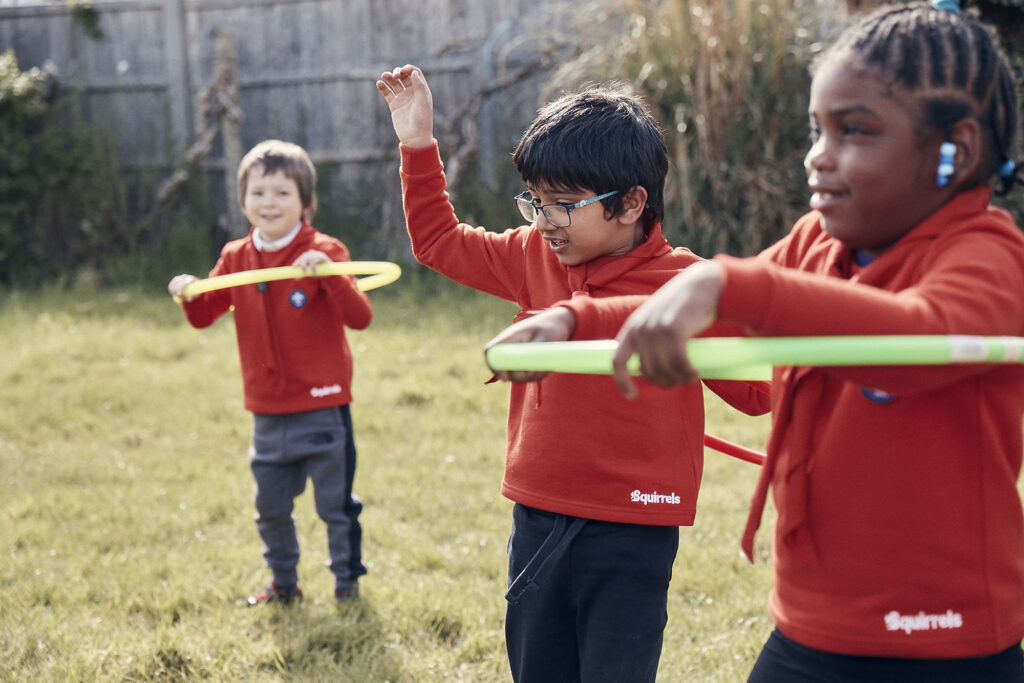
In September 2021, Scouts launched Squirrels for four and five-year-olds, the biggest expansion of the UK Scout programme for many years. Squirrel Dreys soon began appearing in Groups across South East Scotland, opening the adventure to a new generation.
The 30th Craigalmond celebrated its 100th anniversary with an oral history project. Young people took part as researchers and interviewers, uncovering the memories of those who had come before them.
Read more about the 30th’s centenary
Bringing together historical records, photographs and interviews with former members, the project gives an extraordinary view of how one Scout Group developed over a century, and shows the value of preserving stories before they are lost. See where it began in 1924.
After an eighteen-month break, the 9th Braid (George Watson’s College), first formed in 1908, returned with a new volunteer team and began welcoming young people to Beavers and Cubs once again.
The 9th Braid’s new leadership team, June 2024.
The revival was a reminder that Scouting’s long history does not guarantee its future. Every generation depends on volunteers willing to keep the adventure going. Read the story of the 9th Braid’s return.
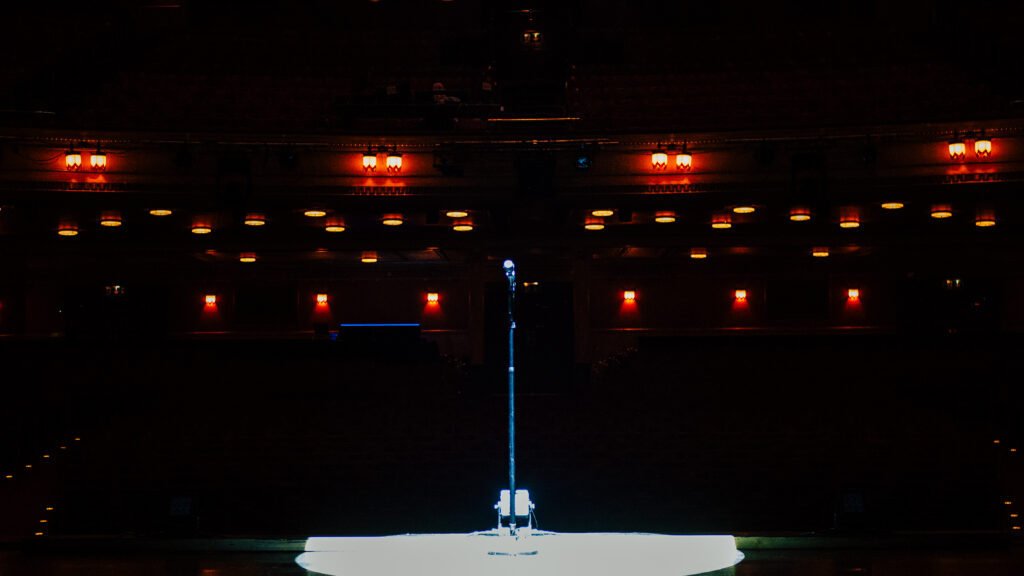
In November 2026, Edinburgh Gang Show returns to the newly redeveloped King’s Theatre, the stage where its first production took place in 1960, after four productions at the Festival Theatre. Almost 200 young people from Scouts and Girlguiding will take part.
The stage is set.
From the small Scout concerts of 1910 to the Edinburgh Gang Show of today, the connection between Scouting, creativity and community remains as strong as ever. Discover Edinburgh Gang Show.
South East Scotland Scouts now brings together seven Districts across Edinburgh, East Lothian, Midlothian and the Scottish Borders. From Bonaly and Longcraig to local Scout halls, community events, international expeditions and the Edinburgh Gang Show, young people continue to explore, belong, learn new skills and make a difference.
Our history isn’t just a collection of important dates or famous people. It’s the young person who went camping for the first time. The volunteer who kept a Scout Group running through difficult years. The friendships that lasted a lifetime. The traditions passed between generations, sometimes without anyone remembering quite where they began.
And it’s the next generation of young people and volunteers, creating memories that will one day become part of this story.
Our history is still being written.
Some Scout Groups have preserved remarkable accounts of their own histories. These collections help tell the wider story of Scouting in south-east Scotland, and they’re well worth exploring. Each link opens the Group’s own site in a new tab.
A longstanding Group in Corstorphine, formerly the 10th Midlothian and 10th Haymarket, believed to have been meeting by late 1907, before Scout registration began.
Visit the Group ↗ 1908An extensive archive dating back to 1908, including logbooks, photographs and camp reports.
Explore the archive ↗ 1908Recognised by Scouts among the Groups believed to have begun in 1908.
See the Scouts list ↗ 1911Established on 11 March 1911, and still Scouting in Gorebridge today.
Read its history ↗ 1924Founded in 1924, with an extensive centenary oral history collection.
Hear the oral histories ↗ 1931Decades of camps, activities, photographs and personal histories.
Explore the collection ↗ 1937Historic photographs and an account of the District reorganisations that shaped it.
See the photographs ↗